

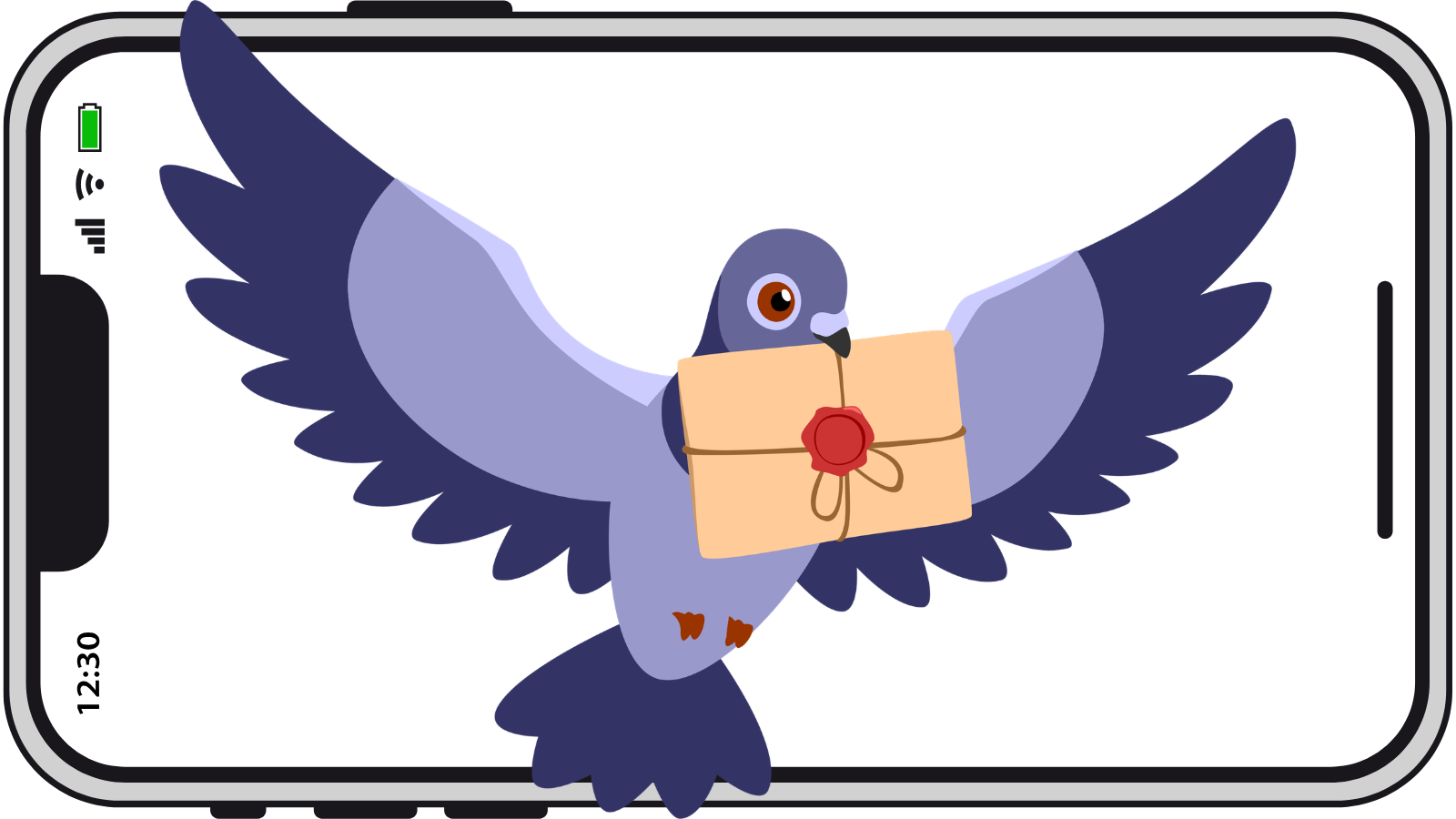
Gen Z has turned retro-fetishism into an art form. From dumbphones and wired earbuds to vinyl records and analog cameras, they have routinely revived obsolete tech to carve out stability in an hyper-connected world. But their latest obsession doesn’t stop at raiding the twentieth century—it leaps back hundreds of years. The new craze? Sending letters by carrier pigeon. And, with the usual cinematic disclaimer, no birds are harmed in the process: these pigeons are entirely digital.
Enter the rise of “slowcial” platforms—a mashup of slow and social—designed to make messaging intentionally sluggish. On Carrier Pidge, built by American developer Noah Iarrobino, dispatching a note from Delhi to Bengaluru takes roughly 10 to 12 hours. Launched in April, the app lingered in relative obscurity before an August social media post went viral, sending its download numbers surging.
competing platform, Roost, founded by Logan Mendelsohn, takes the concept even further. Users can send messages via more than 1,000 virtual creatures, each calibrated to real-world biology. Send a dispatch via snail and it crawls forward at barely 1.5 kilometers per hour; an owl covers roughly thirty kilometers in the same span. Both apps feature live maps to trace a delivery’s progress, capping speeds around 177 km/h. On Carrier Pidge, there is even a 0.2 percent chance your bird gets lost or dies en route—requiring a 99-cent fee to dispatch a replacement. Roost, meanwhile, incorporates a global “Pen Pal” feature that pairs users with complete strangers.
Why embrace synthetic inefficiency? Speaking to The New York Times, Iarrobino framed the app as part of the broader “slow-tech” counterculture—a refuge for people exhausted by relentless digital tethering. Mendelsohn echoed this to TechCrunch, noting that hyper-connectivity turns daily life into an unending barrage of pinging alerts. Slowing down communication, they argue, restores gravity, intimacy, and intentionality to everyday exchanges.
Subscribe to get updates, bookmark, or comment.