

By Sanjay Dubey
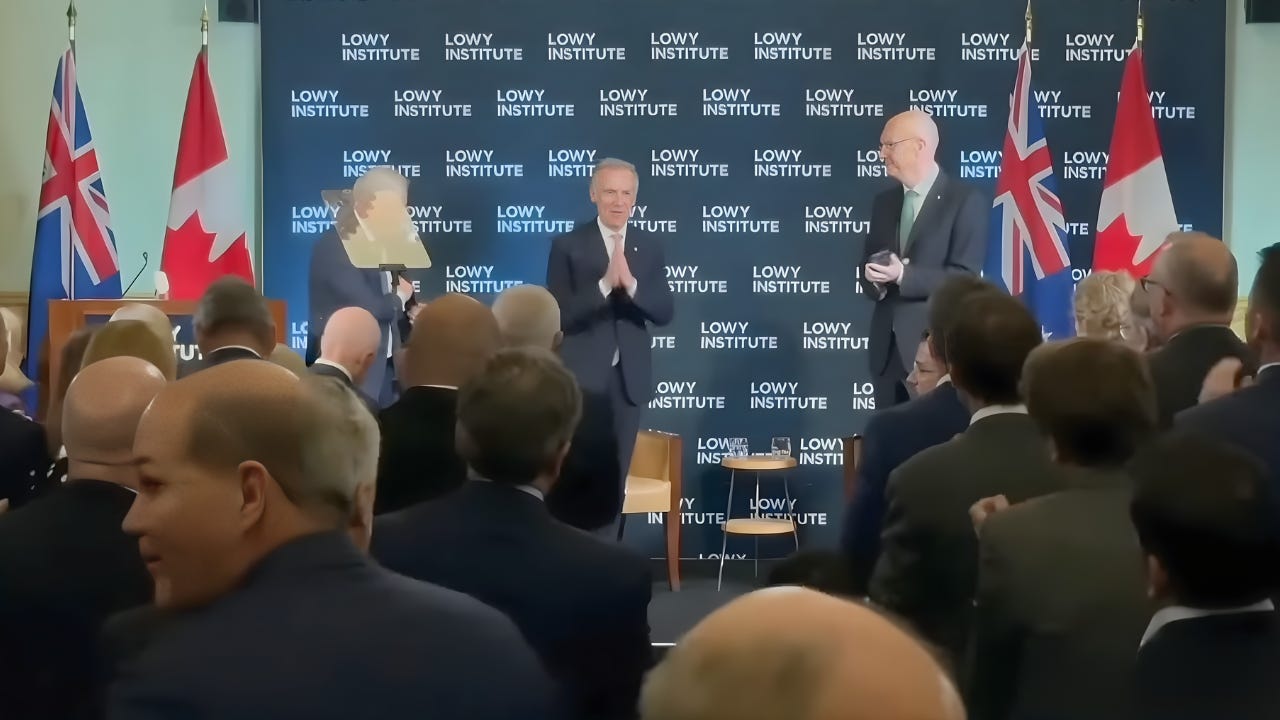
On March 4, 2026, during a discussion at the Lowy Institute in Sydney, Canadian Prime Minister Mark Carney ended his remarks with an unusual gesture. Instead of waving or nodding, he briefly pressed his palms together to thank the audience.
It was a small, almost reflexive moment at the end of a high-stakes program that many might not have even noticed. But for those who did, it might have triggered a vivid memory of exactly six years ago.
It was March 2020, when the COVID-19 pandemic first tightened its grip on India, forcing a nationwide lockdown. At that time, the world was scrambling for ways to say “hello” or “thank you” without risking infection. Six years later, seeing one of the most educated leaders of the G7 fold his hands in a high-level forum in Australia suggests a deeper reality: India’s most widely used body gesture has moved beyond a cultural symbol to become a global symbol of hygienic, sincere, and refined etiquette.
The Indian folded-hand gesture, called the Anjali Mudra, is rooted in the Vedas and the Natya Shastra. It has always served a multi-dimensional purpose: it is the posture of worship, the standard social greeting (Namaste), and a profound expression of gratitude. And these are not separate from each other. Whether you say “hello” or a heartfelt “thank you,” you also acknowledge a spiritual presence in the other person.