

By Sanjay Dubey
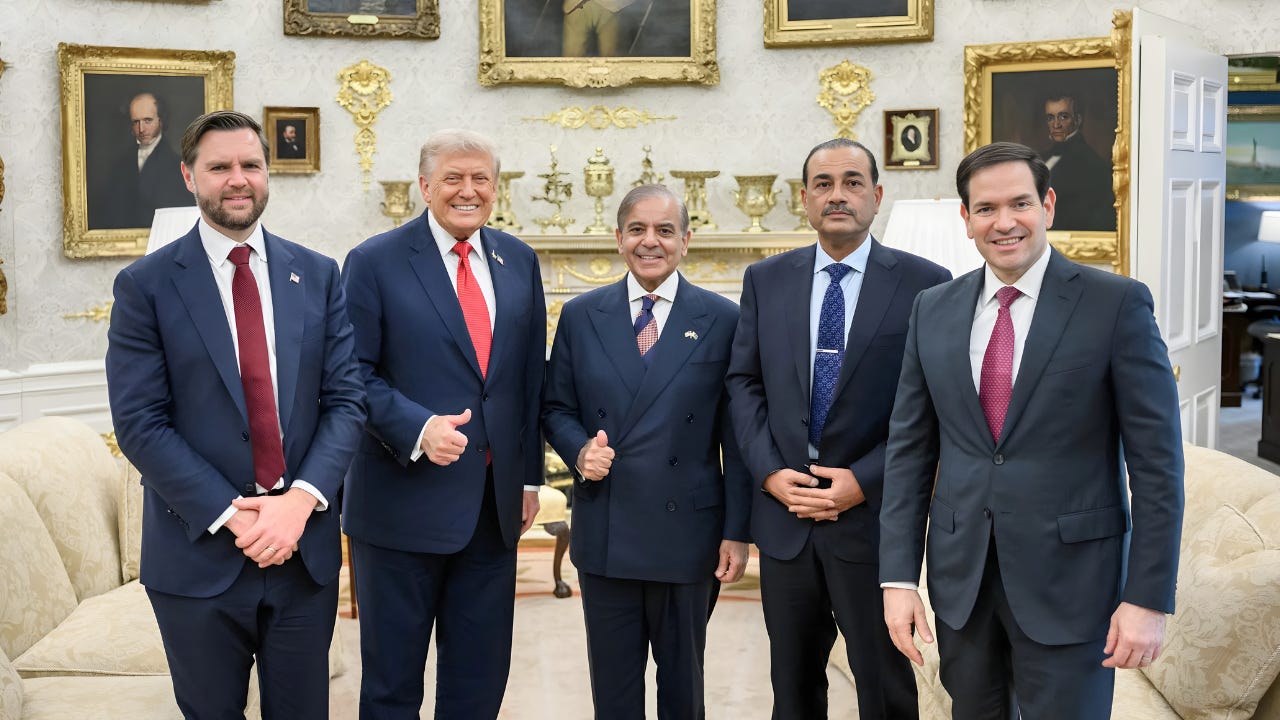
“Based on conversations with Prime Minister Shehbaz Sharif and Field Marshal Asim Munir of Pakistan, and wherein they requested that I hold off the destructive force being sent tonight to Iran… I agree to suspend the bombing and attack of Iran for a period of two weeks. This will be a double-sided CEASEFIRE!”
Donald Trump, the President of the United States, wrote on social media announcing the ceasefire between the US-Israel alliance and Iran.
In an official statement, Iran’s Foreign Minister Seyed Abbas Araghchi, responding to the “brotherly request of PM Sharif”, also declared the ceasefire on behalf of Iran’s Supreme National Security Council. He expressed gratitude and appreciation for his “dear brothers HE Prime Minister of Pakistan Sharif and HE Field Marshal Munir for their tireless efforts to end the war in the region.”
In the volatile weeks following the February 28 US–Israeli strike that killed Iran’s Supreme Leader Ali Khamenei, a quiet but profound role reversal unfolded in South Asian diplomacy. Pakistan—often dismissed as a rogue actor in world affairs—emerged as the most visible mediator in the Middle East crisis. India, with its centuries-old civilisational links to Iran, strong ties with both the US and Israel, non-aligned legacy, membership of the Quad, presidency of BRICS+, and reputation as a principled global voice, found itself largely on the margins—issuing measured calls for restraint while watching Islamabad take the lead in a conflict that affected not just a few countries, but much of the world.