

By Sanjay Dubey
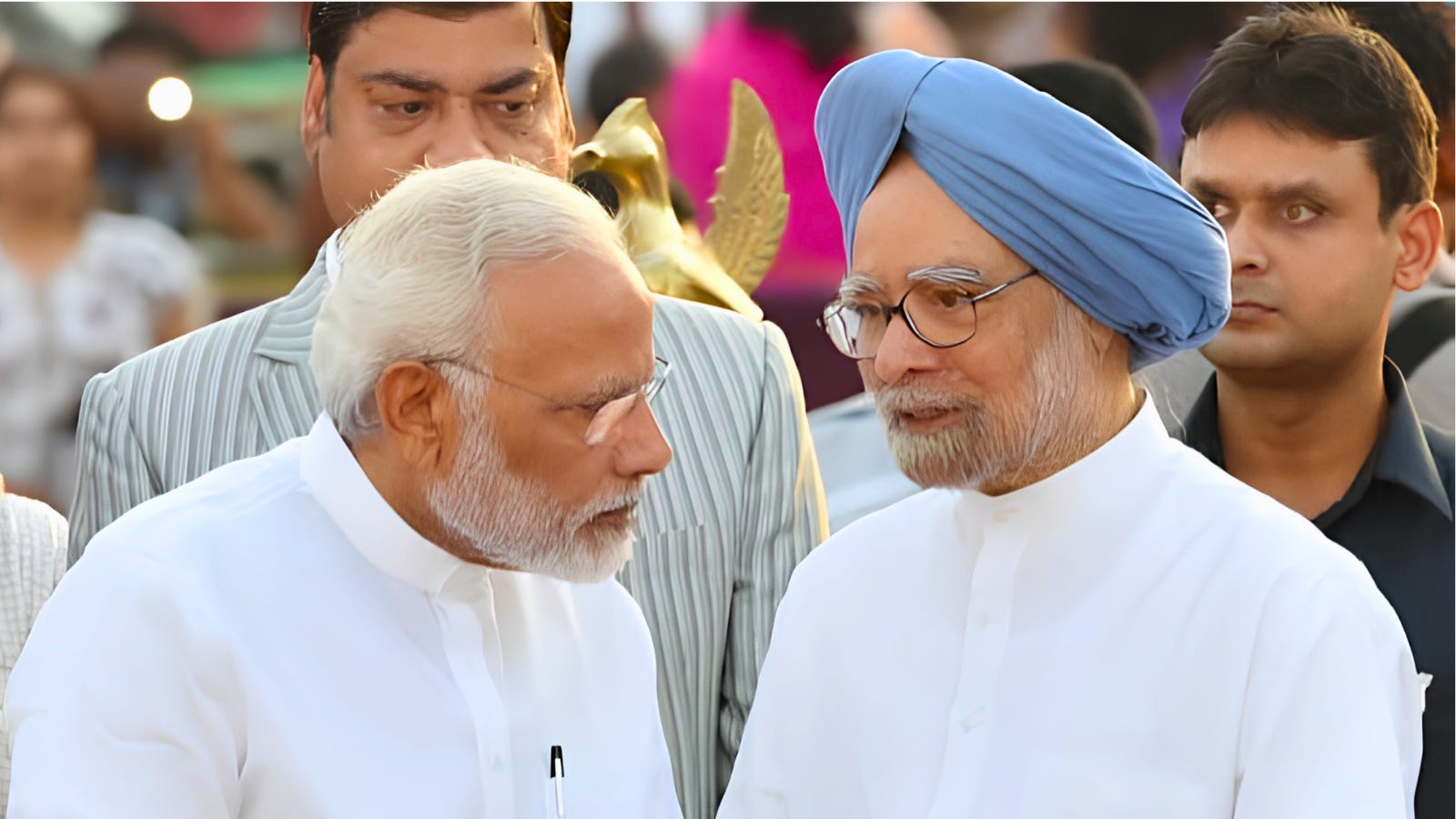
When Narendra Modi swept to power in May 2014, he offered the Indian electorate a compelling promise: clean administration and turbo-charged development. He pledged “minimum government, maximum governance” and championed the business-friendly “Gujarat model”. He asked voters for just five years to alter the nation’s trajectory: “You gave Congress 60 years, give BJP just 60 months. We will change India’s future and bring about development in 60 months”.
For years, public discourse in India has wrestled with how to evaluate his record. Supporters highlight his achievements, while critics point to his failures. But there is one more way to look at it.
“For a long time, the Modi government’s stance on criticism of its performance has been to blame the previous government, specifically the Congress government. In other words, they’ve argued that they were handed a very poor hand, and that much of this poor performance can be blamed on what was handed down to them,” observes Dr. Sumeet Malik, an economist at the University of Amsterdam, in a video analysis.
A research paper, “Promises, Promises: Governance and Growth in India under Modi and the BJP,” by Kevin Grier and Robin Grier of Texas Tech University offers an unique way to test this argument. Instead of measuring India against theoretical benchmarks or just comparing 2023 with 2013, the study asks a deceptively simple question: What might India have looked like if its pre-2014 trajectory had simply continued?
The researchers attempt to answer this by constructing a “Synthetic India”—a statistical version of the country that mirrors how India was performing before Narendra Modi took power…
Subscribe to get updates, bookmark, or comment.